Watch the replay
Missed it? No worries, fill in your details and get instant access to the recording.
The consignment note goes digital
Road freight still runs on paper. And paper has a habit of slowing things down. Documents arrive late, information gets entered more than once, and drivers wait while back offices chase signatures, updates and proof of delivery.
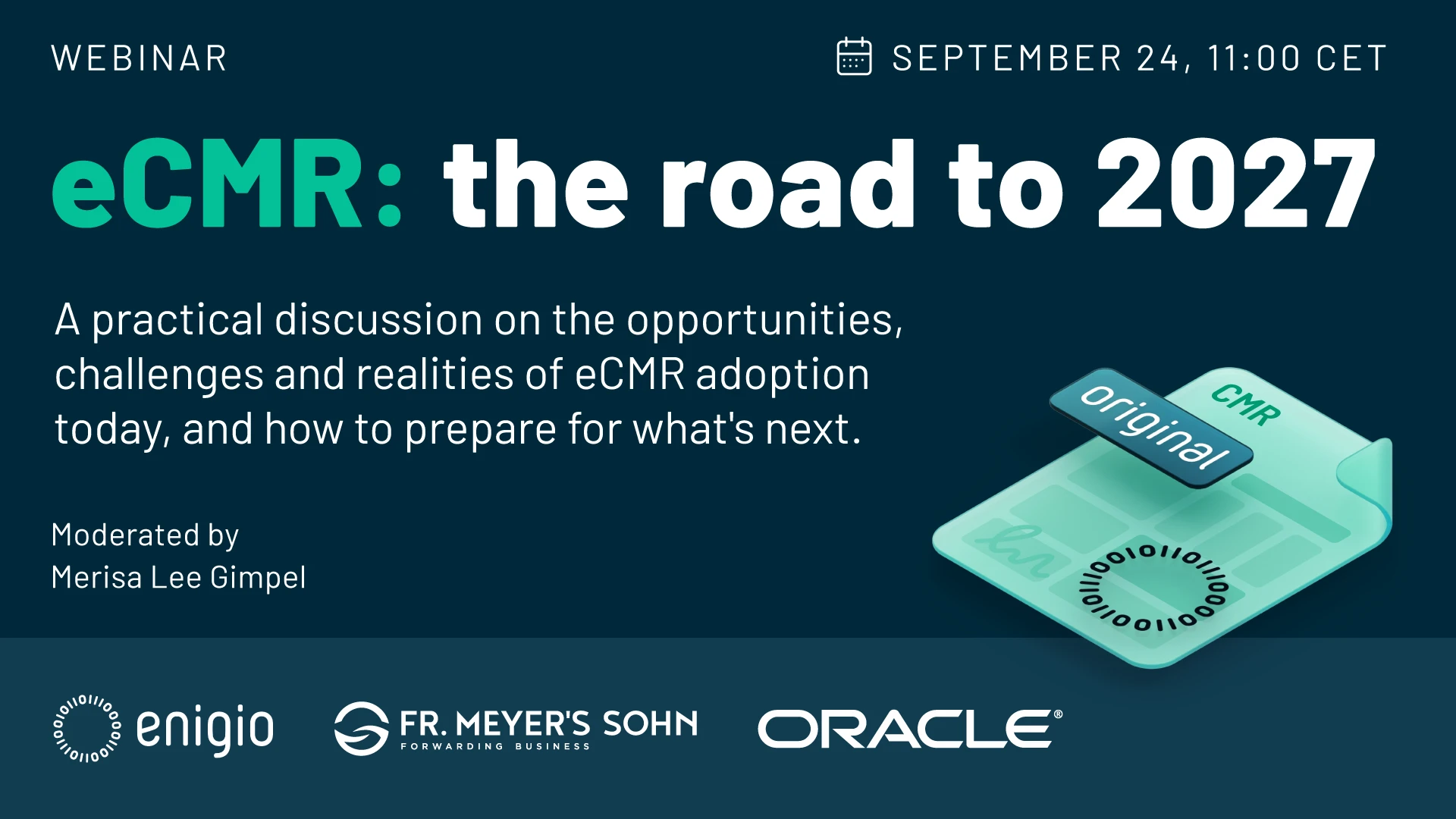
eCMR gives the familiar consignment note a digital life. It can combine a human-readable document with structured, machine-readable data, move with the goods, be updated when circumstances change and integrate with other digital processes. And it can be portable and independently verifiable without relying on a central document registry.
Across Europe, the transition is gaining momentum.
Why now? eFTI will require authorities across the EU to accept electronic freight information from July 2027, countries such as Spain are already introducing mandatory digital freight documentation, and interoperability is moving up the industry agenda.
In this edition of the Digital Trade Playbook, we'll look at where eCMR stands today, what is driving adoption, what is still holding it back, and what businesses can do now to prepare.
The panel
You'll hear from:
- Christian Baumbach, Head of Overland, Fr. Meyer’s Sohn
- Dominic Regan, Senior Director for Logistics Solutions, Oracle
- Göran Almgren, Director, New Markets, Enigio
Moderated by Merisa Lee Gimpel of Digital Trade Works.
What you’ll take away:
- What eCMR is and where it fits in road freight
- Why digital freight documentation is gaining momentum across Europe
- How regulation is influencing the direction and pace of adoption
- What eCMR could change for carriers, shippers and logistics providers
- The practical obstacles that still need to be addressed
- What organisations can do now to prepare for less paper and better-connected freight