Digitise your CMR.
Keep control.
Still working with paper CMRs?
We’ve got a better solution.
The 1% problem
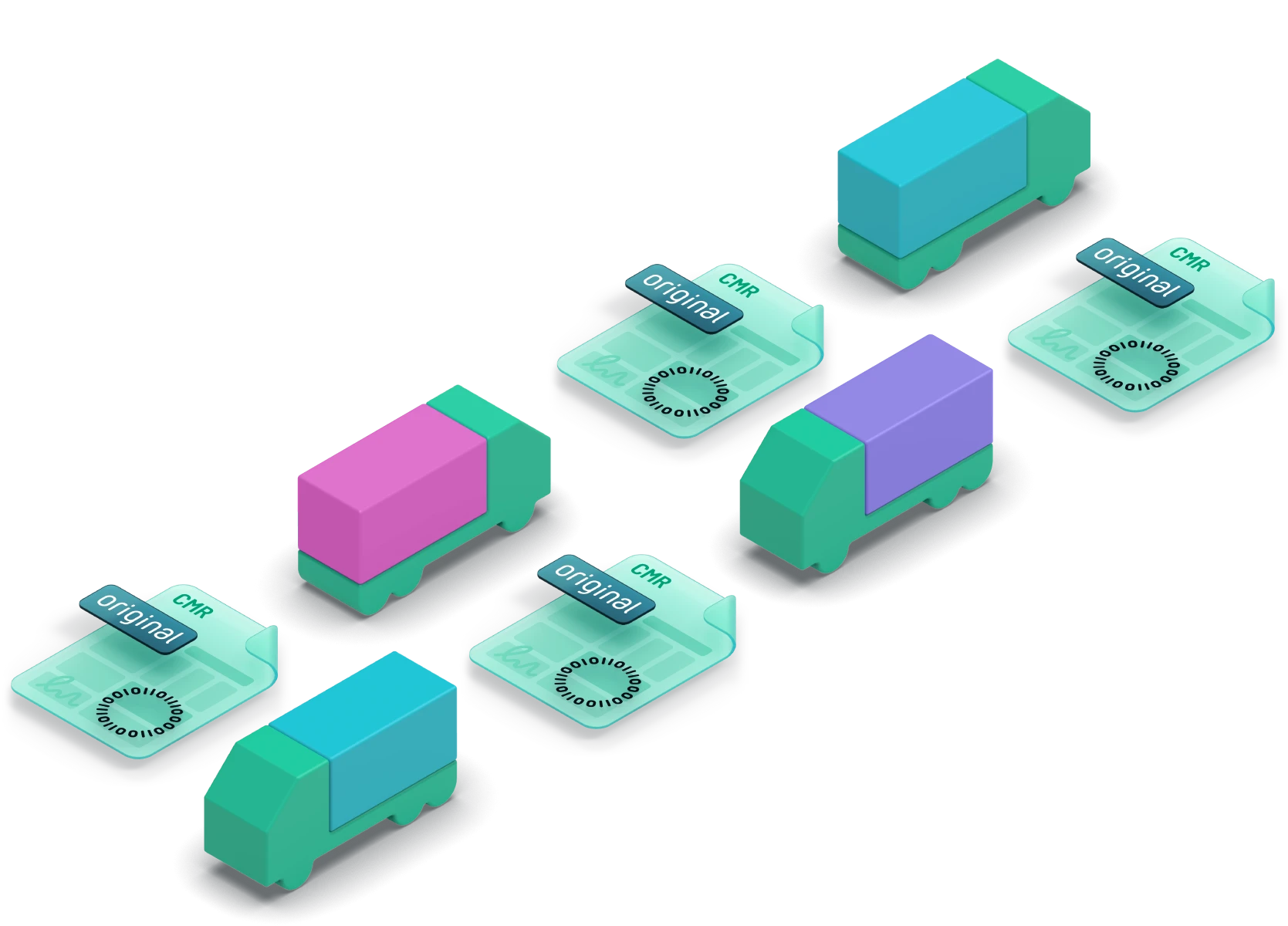
Every year, 280 million CMRs cross Europe’s roads. Fewer than 1% of them are electronic, even though the eCMR protocol has existed since 2011.
That gap is about to matter a lot more. From 9 July 2027, the EU’s eFTI Regulation requires every member state to accept electronic freight data. Spain has already gone further: its domestic DeCA becomes mandatory from 5 October 2026, checked by QR code at the roadside.
The operators who move now will be ready before the deadline bites. Everyone else will be digitising under pressure, on someone else’s timeline.
Paper CMRs.
Closed eCMR platforms.
Neither works.
Scan the paper original and send it around by email. It’s faster, but you’ve lost the one thing paper was actually good for: a single, trusted original. Copies get edited, forwarded and lost track of, and nobody downstream can tell which version is the real one.
Or join a platform built specifically for eCMRs. That fixes the authenticity problem, but only for whoever’s already inside it. Every new partner needs a contract, an account and onboarding before the document works for them. Step outside the platform, and you’re back on paper.
Enigio takes a third route.
One eCMR. One owner at a time.
Enigio’s eCMR is a genuine digital original, not a shared record sitting on a platform. Only one party holds it at any moment, and every action, from creation to signing, handover and delivery, gets written straight into the document as it happens.

In practice:
- The consigner or freight forwarder creates the eCMR and issues it through Enigio’s API
- The carrier gets access and signs at pick-up
- If goods change carrier, access transfers with them
- At delivery, access passes to the receiving warehouse, which can keep updating the document
Every step writes into the audit trail automatically, so there’s never a separate system to reconcile against.
This is powered by Enigio’s trace:original technology — the same document architecture already used for bills of lading and other trade finance instruments, applied here to the consignment note.
What an eCMR gets you
eCMR: built for the road ahead
CMRs are governed by the 1956 CMR Convention. The eCMR Protocol, added in 2011, gives electronic consignment notes equal legal standing, and 42 countries have now acceded, most recently Serbia in August 2026.
Enigio has tested this in live transport flows since 2021, most recently on a Nordic manufacturer’s regular Sweden–Turkey lane, run in parallel with the existing paper process before going live.
Frequently asked questions
Yes. The eCMR Protocol, added to the CMR Convention in 2011, gives electronic consignment notes the same legal standing as paper. More than 40 countries have acceded, including Serbia, most recently in August 2026.
Ditch the paper, keep the trust.
Leave your details and we’ll get in touch to show you how to cut the costs, risks, and delays of paper documents — without losing legal certainty.
Let’s make your trade digital, secure, and seamless.