Digital bills of exchange – negotiable instruments
for the modern age
Negotiable instruments never lost their value.
Paper just got in the way.
With Enigio’s trace:original, bills of exchange can now be issued, transferred, and enforced digitally — fully aligned with MLETR or, where applicable, under contract law via ITFA’s ePU standard.
This isn’t theoretical. Digital bills of exchange from Enigio have already been used by global banks and corporates — including J.P. Morgan, Lloyds Bank, and Mercore — in live trade and supply chain finance transactions.

Why paper bills of exchange hold trade back
Bills of exchange are one of the most elegant tools in trade finance — a simple, globally recognised way to evidence and transfer debt.
But in practice, they’ve become underused. Not because the instrument is flawed — but because paper is.
Traditional bills of exchange must be printed, signed in wet ink, couriered between parties, and manually checked at every step. In modern trade flows, that friction often outweighs the benefit.
Digitalisation removes that friction without changing the instrument itself.
Meet trace:original – the digital, original, and open bill of exchange
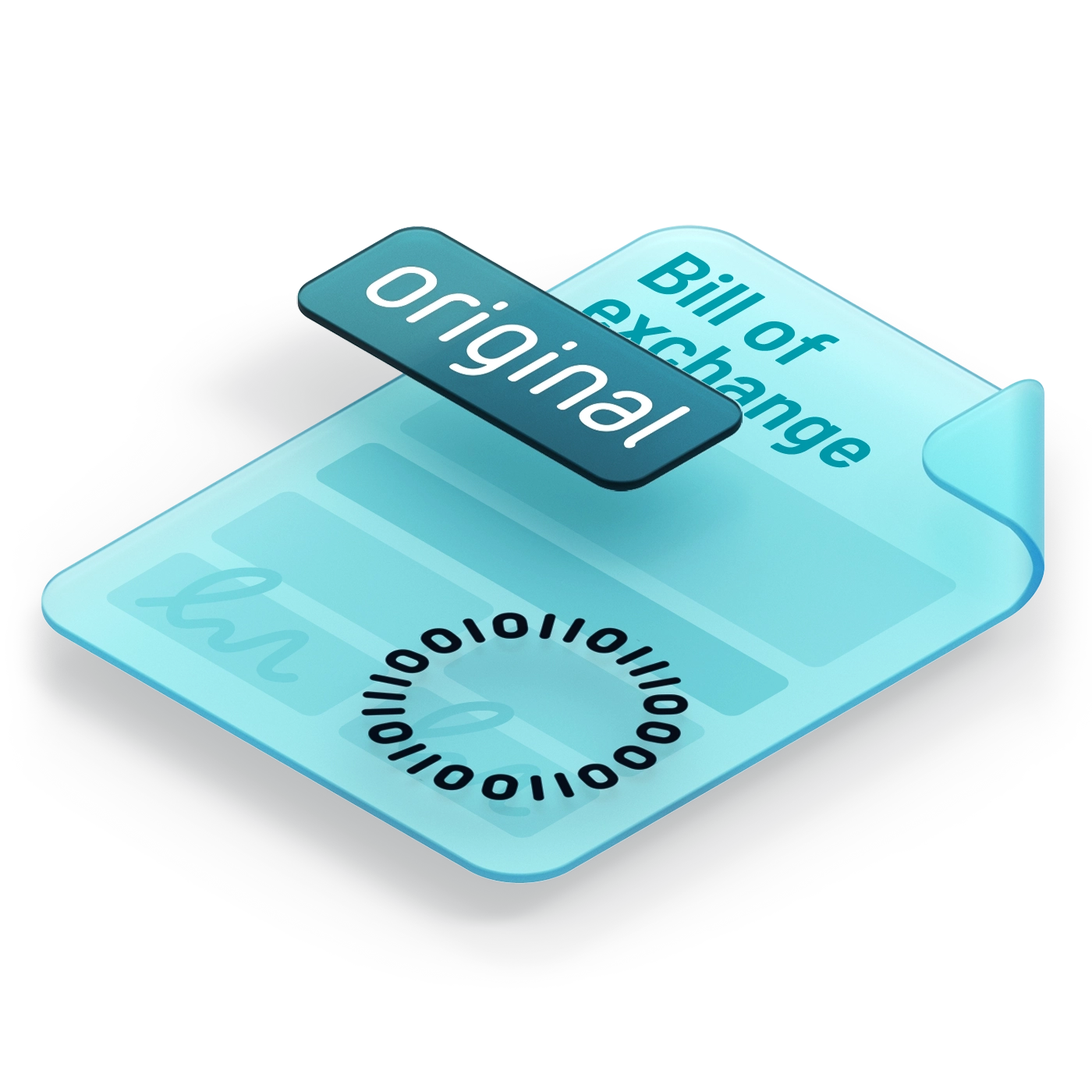
Enigio’s trace:original technology creates digital originals that replicate the legal properties of paper bills of exchange: originality, possession, and transferability.
Only the issuer needs an Enigio account. Once issued, the digital bill of exchange can be received, held, and transferred by anyone, anywhere, using standard tools.
This open approach is what has enabled real-world adoption — from banks digitising trade finance instruments to corporates executing cross-border transactions without forcing counterparties onto closed platforms.
Key benefits of digital bills of exchange
Faster transactions, smoother liquidity
Bills of exchange can be issued and transferred in seconds rather than days. In practice, this means documents no longer arrive after the goods.
Lower costs, fewer manual errors
Removing couriers and manual handling cuts processing costs significantly and shortens lead times.
Secure, tamper-proof, and fraud-resistant
Each digital bill of exchange is cryptographically secured and includes a full audit trail. Only the holder can endorse, transfer, or invalidate the document, ensuring integrity throughout its lifecycle.
Open and interoperable by design
trace:original bills of exchange are standard PDFs with structured data for straight-through processing. They can move freely between banks, platforms, and counterparties.
Sustainable and inclusive
By eliminating paper and courier transport, digital bills of exchange reduce emissions and make smaller, faster transactions viable — supporting broader SME participation in trade finance.
Legal frameworks that make digital bills of exchange possible
Under the UNCITRAL Model Law on Electronic Transferable Records (MLETR), electronic documents can carry the same legal standing as paper — as long as originality, possession, and transferability are preserved. That’s exactly what trace:original is built to do.
And this isn’t theory. It’s already happening.
Banks including J.P. Morgan and Lloyds Bank have publicly shown how digital bills of exchange can move from regulation to real-world use — bringing negotiable instruments back into modern trade flows.
Where MLETR isn’t yet in place, there’s still a path forward. Through International Trade and Forfaiting Association’s electronic payment undertaking (ePU), bills of exchange can be supported under contract law — and trace:original works with that framework too.
Different jurisdictions. One direction of travel.
The digital bill of exchange process
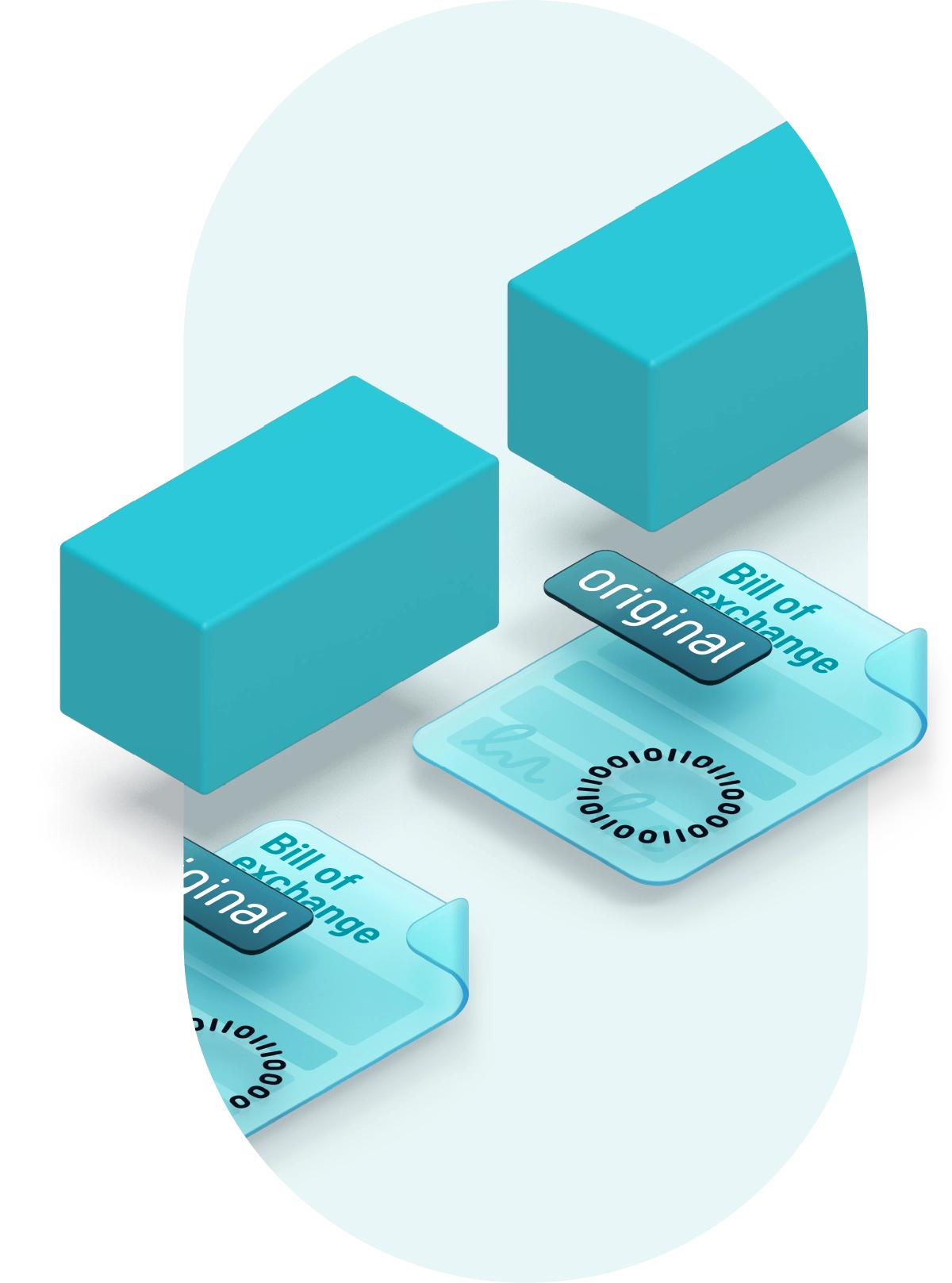
A trace:original bill of exchange remains digital throughout its lifecycle — from issuance to endorsement, transfer, and settlement.
The process mirrors the familiar paper flow, but without physical documents, couriers, or manual reconciliation. This is the same approach already used in early digital bill of exchange transactions executed by corporates such as Mercore.

Ditch the paper, keep the trust.
Leave your details and we’ll get in touch to show you how to cut the costs, risks, and delays of paper documents — without losing legal certainty.
Let’s make your trade digital, secure, and seamless.
Frequently asked questions
A digital bill of exchange is an electronic negotiable instrument that records and transfers debt, carrying the same legal and commercial functions as a paper bill of exchange — without physical handling.